A wooden cable drum is a sized piece of packaging for a specific reel of cable. Pick the wrong dimensions and you either can't fit the cable on the drum, can't bend the cable tight enough around the barrel without damaging it, or can't get the drum through a doorway at the customer's site. Understanding the four dimensions that matter is the first step to ordering one that works.
A wooden cable drum is a sized piece of packaging for a specific reel of cable. Pick the wrong dimensions and you either can't fit the cable on the drum, can't bend the cable tight enough around the barrel without damaging it, or can't get the drum through a doorway at the customer's site. Understanding the four dimensions that matter is the first step to ordering one that works.
The Four Dimensions That Matter
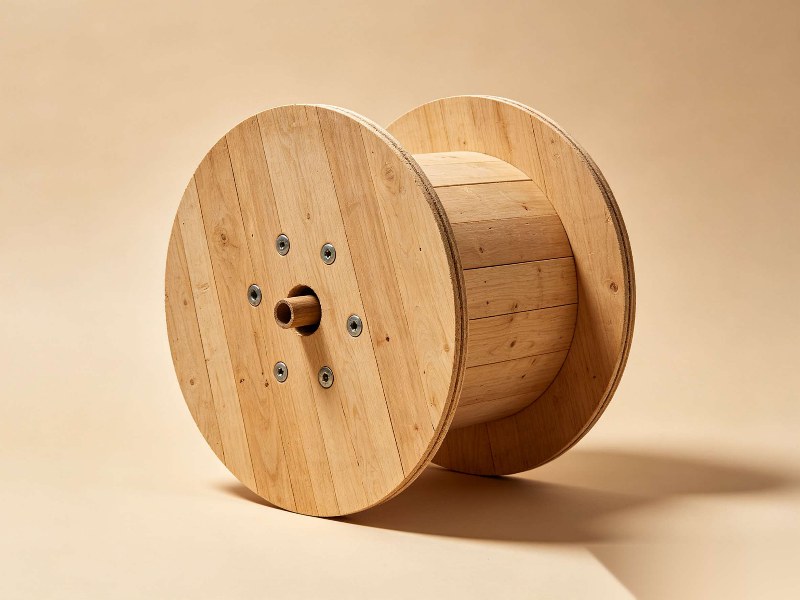
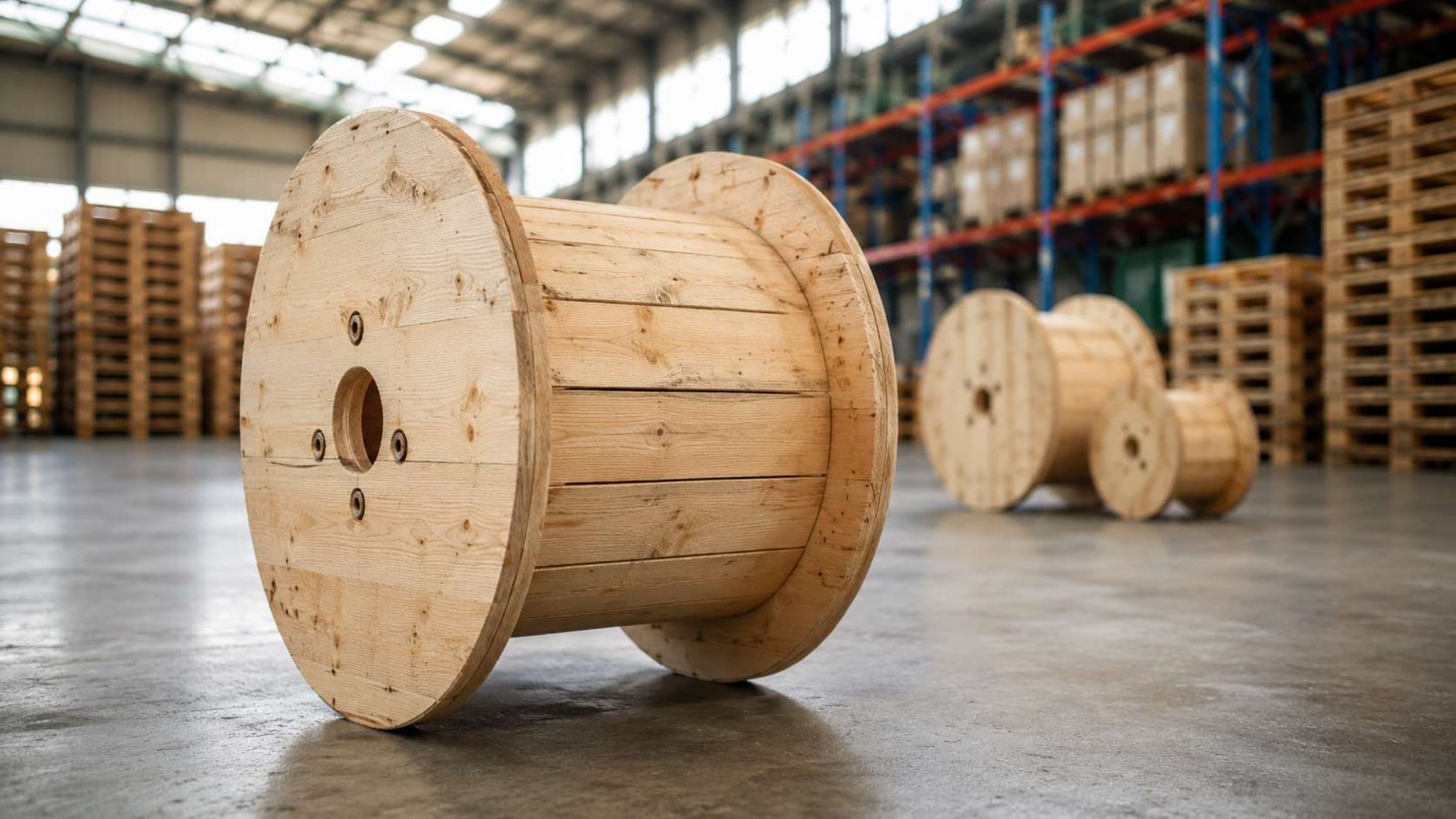
1. Flange Diameter
The diameter of the two circular wooden discs on either side of the drum. This is the headline measurement — the "size" of the drum. It determines how much cable you can wind on (more flange = more cable capacity) and how the drum will be handled (forklift, crane, or rolled along the ground).
2. Barrel Diameter
The diameter of the inner cylindrical core that the cable wraps around. This is the most under-considered measurement, and the most important for cable health. Most cables have a minimum bend radius — the tightest curl they can take without the conductors being damaged. The barrel diameter must equal or exceed that minimum bend radius.
Get this wrong and the inner layer of cable is permanently damaged the moment you wind it. Always check the cable manufacturer's spec sheet for minimum bend radius before specifying barrel diameter.
3. Traverse (Internal Width)
The distance between the two flanges — the "width" of the winding area where cable actually sits. Combined with barrel and flange diameters, the traverse determines total cable capacity. Wider traverse holds more cable but the drum is harder to handle through tight doorways.
4. Centre Bore
The hole through the centre of both flanges. This is for the shaft or spindle that the drum sits on during winding and unwinding. Bore size must match the customer's payout equipment — too small and the equipment doesn't fit, too large and the drum wobbles under load.
How to Size a Drum from Cable Specs
The information you need from the cable supplier:
- Cable outer diameter (OD) — usually in mm
- Total cable length to be wound
- Minimum bend radius — usually a multiple of OD (e.g., "8 × OD")
- Cable weight per metre — for drum structural sizing
From those, the drum dimensions follow:
- Barrel diameter ≥ minimum bend radius (with safety margin)
- Traverse determined by total cable volume to be wound
- Flange diameter determined by total cable volume plus a margin so the outer cable layers don't reach the flange edge
- Wall thickness and internal reinforcement sized from total cable weight
The Handling Question
Don't forget how the drum will actually be moved. Small drums can be lifted by hand or with a hand-truck. Medium drums need a forklift with a drum attachment. Large drums need cranes or specialised payout trailers. Specifying a drum that's too big for the customer's handling equipment is as bad as specifying one that's too small for the cable.
Easiest approach: send us the cable spec sheet (OD, length, weight per metre, minimum bend radius). We'll come back with drum dimensions that work — and check that the size fits through standard doorways at the destination if relevant.
Common Mistakes
- Sizing from cable length alone. The minimum bend radius determines the barrel; ignoring it means damaged cable
- Maxing out the traverse. Filling the drum all the way to the flange edges leaves no room for the outer cable layer and risks the cable falling off during transport
- Wrong centre bore. The drum is for the equipment, not the other way around. Ask the customer for their spindle size before quoting
- Forgetting the door dimensions at the customer's site. A drum that won't fit through their warehouse door is an expensive return trip