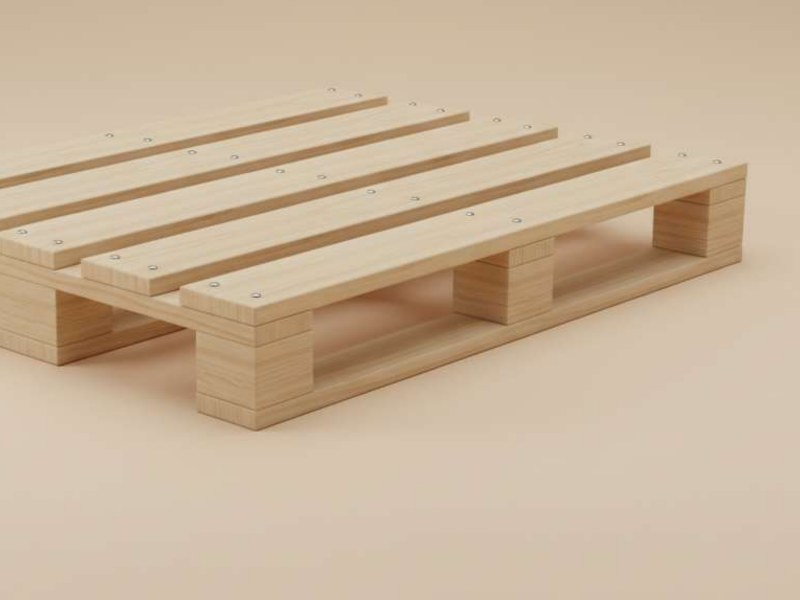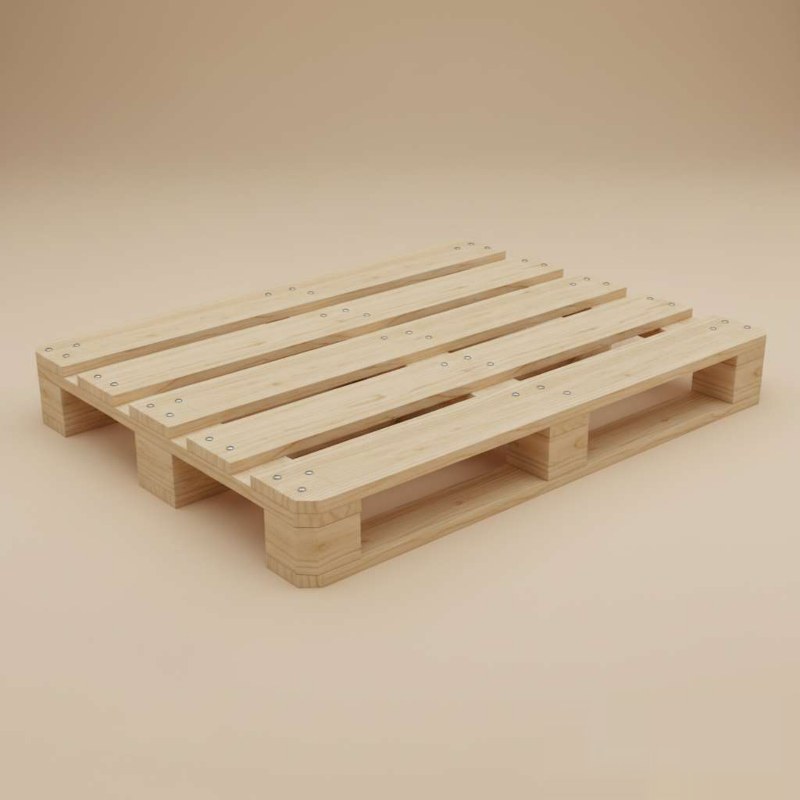
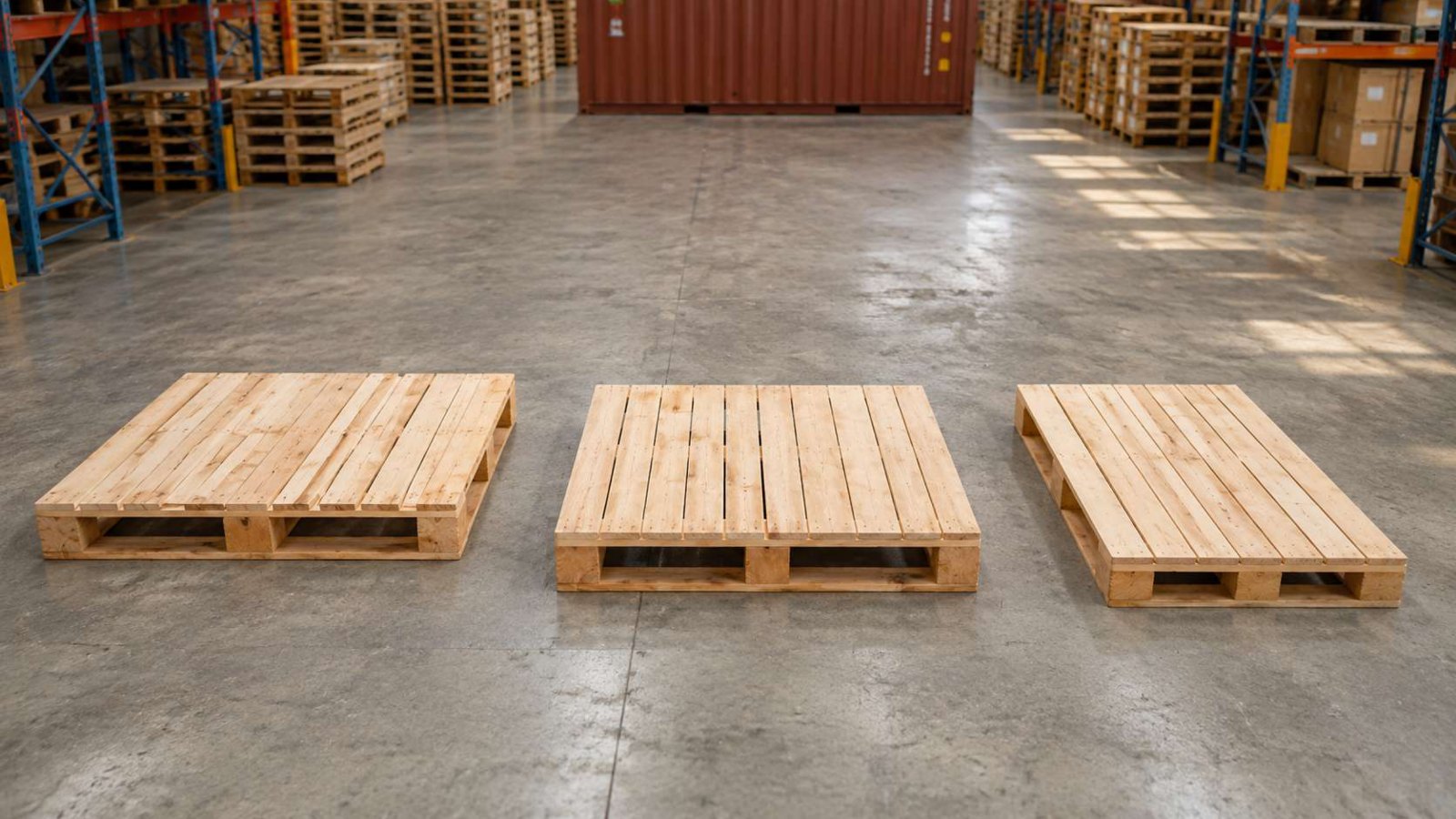
Most pallet conversations in Malaysia revolve around three sizes. They cover the vast majority of factory, warehouse, and export operations. This is a quick reference for what they are, where each is used, and what to ask for when you're ordering.
Most pallet conversations in Malaysia revolve around three sizes. They cover the vast majority of factory, warehouse, and export operations. This is a quick reference for what they are, where each is used, and what to ask for when you're ordering.
The Three Common Sizes
1100 × 1100 mm — The Asian Standard
The default pallet size across most of Southeast Asia and a chunk of East Asia. Square footprint, which means it's symmetrical — pallet orientation doesn't matter for racking or container loading.
- Typical use: domestic shipping, regional ASEAN exports, general warehouse stock
- Container fit: 10 pallets per 20-foot container floor (in two rows of 5), 20 pallets per 40-foot
- Common construction: 4-way block pallet, hardwood or softwood, often heat-treated for export
1200 × 1000 mm — The Hybrid
Close to North American GMA-style sizing. Used in operations standardised on US-pattern racking or shipping to GMA-aware markets. Rectangular, so pallet orientation matters for both racking and container packing.
- Typical use: exports to North America, Asia-Pacific markets following GMA standards, operations with imported US-spec racking
- Container fit: 10 pallets per 20-foot floor (two rows of 5), 20 per 40-foot
- Common construction: 4-way block pallet, often pine for export
1200 × 800 mm — The Euro Pallet (EUR-pallet)
The standard for European shipments. If you export to the EU or UK, expect this to be the required size. Most European racking and most European customers' warehouses are built around it.
- Typical use: EU exports, UK exports, Middle East shipments where European standards dominate
- Container fit: 11 pallets per 20-foot floor, 24 per 40-foot
- Common construction: 4-way pine pallet, heat-treated to ISPM-15 standards
Quick Reference Table
| Size (mm) | Region / Standard | Container Fit (40ft) | Typical Use |
|---|---|---|---|
| 1100 × 1100 | Asia / Japan / SEA | 20 pallets | Domestic, ASEAN export |
| 1200 × 1000 | North America / GMA | 20 pallets | US export, GMA racking |
| 1200 × 800 | Europe / EUR | 24 pallets | EU export, UK shipping |
| 1140 × 1140 | Australia | 20 pallets | AU export |
| 1067 × 1067 (42"×42") | North America (less common) | 22 pallets | Specific US industries |
Less Common Sizes You'll Sometimes See
1140 × 1140 mm — Australian Standard
If you ship to Australia, expect to be asked for this size. Slightly larger than 1100×1100 but otherwise similar in use.
800 × 600 mm — Half Euro / Quarter Container
Used for smaller-volume products in European retail logistics. Mostly seen in food and beverage distribution.
Custom sizes
Anything else. Worth a custom size when the standard options waste significant container space relative to your specific carton, or when you're moving non-standard items where the load itself dictates the footprint.
What to Ask for When Ordering
The supplier needs to know three things to quote a standard size:
- Size — 1100×1100, 1200×1000, 1200×800 or other
- Construction — 2-way runner or 4-way block
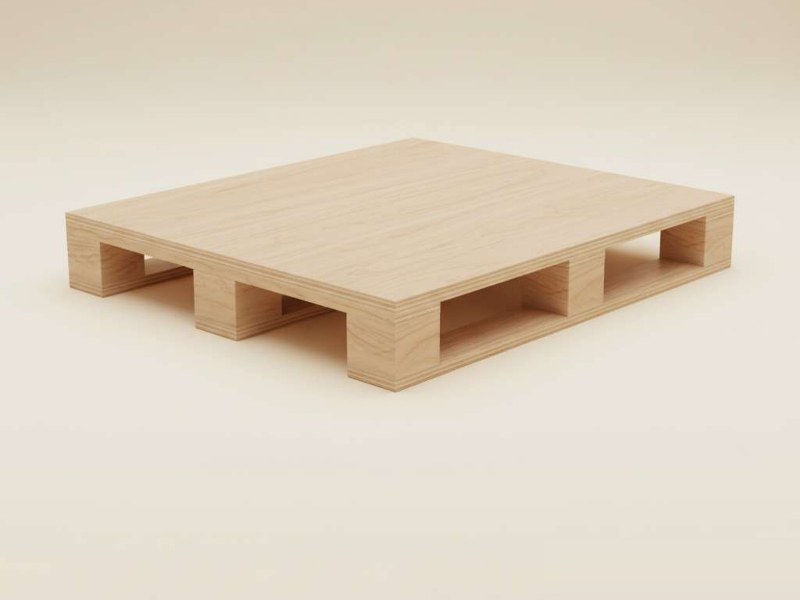
- Material — hardwood, softwood (pine), plywood, LVL, or plastic
Plus quantity and whether you need heat-treatment / ISPM-15 stamping for export. From that, the price and lead time follow.
If you're not sure which standard your operation runs on, check the racking spec or look at an old pallet. The size will be obvious once you measure one. From there, the conversation gets short.