A wooden crate looks like a box, but it's an engineered piece of packaging — and unlike a pallet, almost every crate that leaves a Malaysian factory is custom-sized. Specifying one properly takes more than measuring the contents. This guide walks through what to think about before you ask for a quote.
A wooden crate looks like a box, but it's an engineered piece of packaging — and unlike a pallet, almost every crate that leaves a Malaysian factory is custom-sized. Specifying one properly takes more than measuring the contents. This guide walks through what to think about before you ask for a quote.
Step 1 — Measure What's Going Inside
The starting point is the largest object that has to fit inside the crate. Measure it in all three dimensions, then add:
- 30–50 mm of clearance on each side for the dunnage and internal bracing that holds the contents in place
- 50–100 mm at the top for any tilt-block, suspension straps, or padding above the contents
- The thickness of the crate walls themselves (typically 18–25 mm depending on construction)
The result is the internal-clear dimensions you need. Don't forget the external dimensions add another wall-thickness on each side — that's the number that matters for container packing.
Step 2 — Plan for Handling Clearance
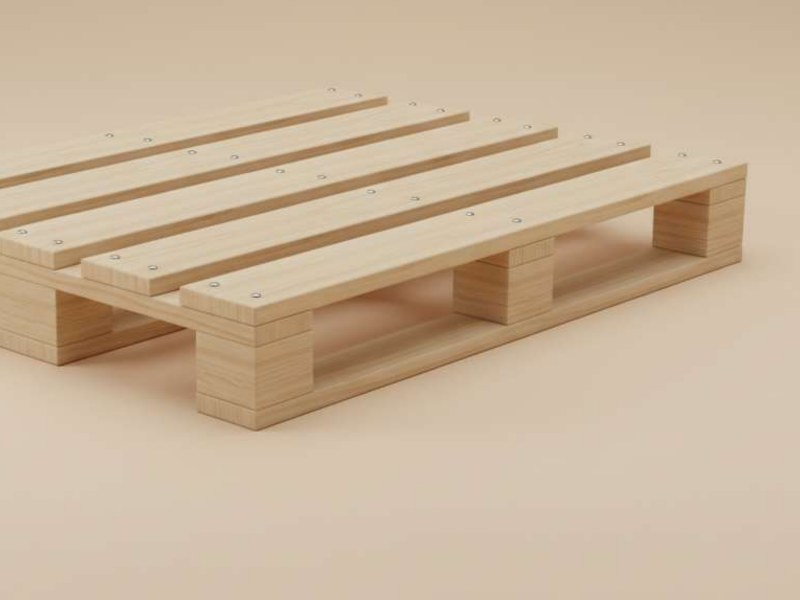
If forklifts will move the crate, the base needs forklift-tine entry. That usually means a skidded base with at least 100 mm of tine clearance, or a full pallet base built into the crate. If cranes or hoists will move it, you'll need lifting points or slinging points designed into the structure — typically reinforced corner posts and obvious markers showing where the slings can sit without crushing the crate sides.
Step 3 — Match the Container Interior
A common, expensive mistake: build a crate that's right for the contents but wrong for the container. Standard container interiors are roughly:
- 20-foot: ~2,350 mm wide × 2,390 mm tall × 5,900 mm long (interior)
- 40-foot: ~2,350 mm wide × 2,390 mm tall × 12,030 mm long (interior)
- 40-foot high-cube: ~2,350 mm wide × 2,690 mm tall × 12,030 mm long (interior)
If your crate's external dimensions don't leave at least 50 mm of clearance on each side from those interior dimensions, you're going to have problems at the port. Always plan from container dimensions backward, not from contents forward.
Step 4 — Pick the Construction Type
Open-slat crate
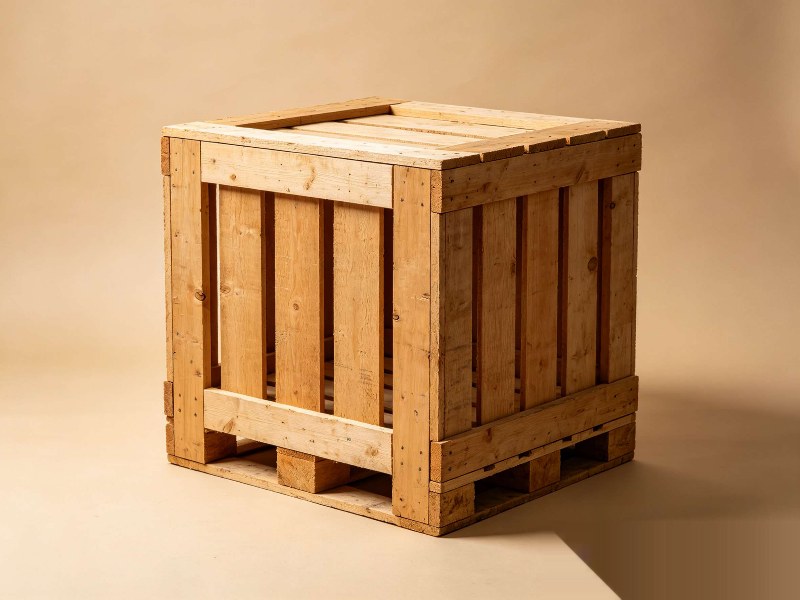
Vertical slats with gaps between them. Cheaper, lighter, allows visual inspection of contents at customs. Best for sturdy contents that don't need full enclosure (large metal parts, machinery castings).
Fully-enclosed plywood crate
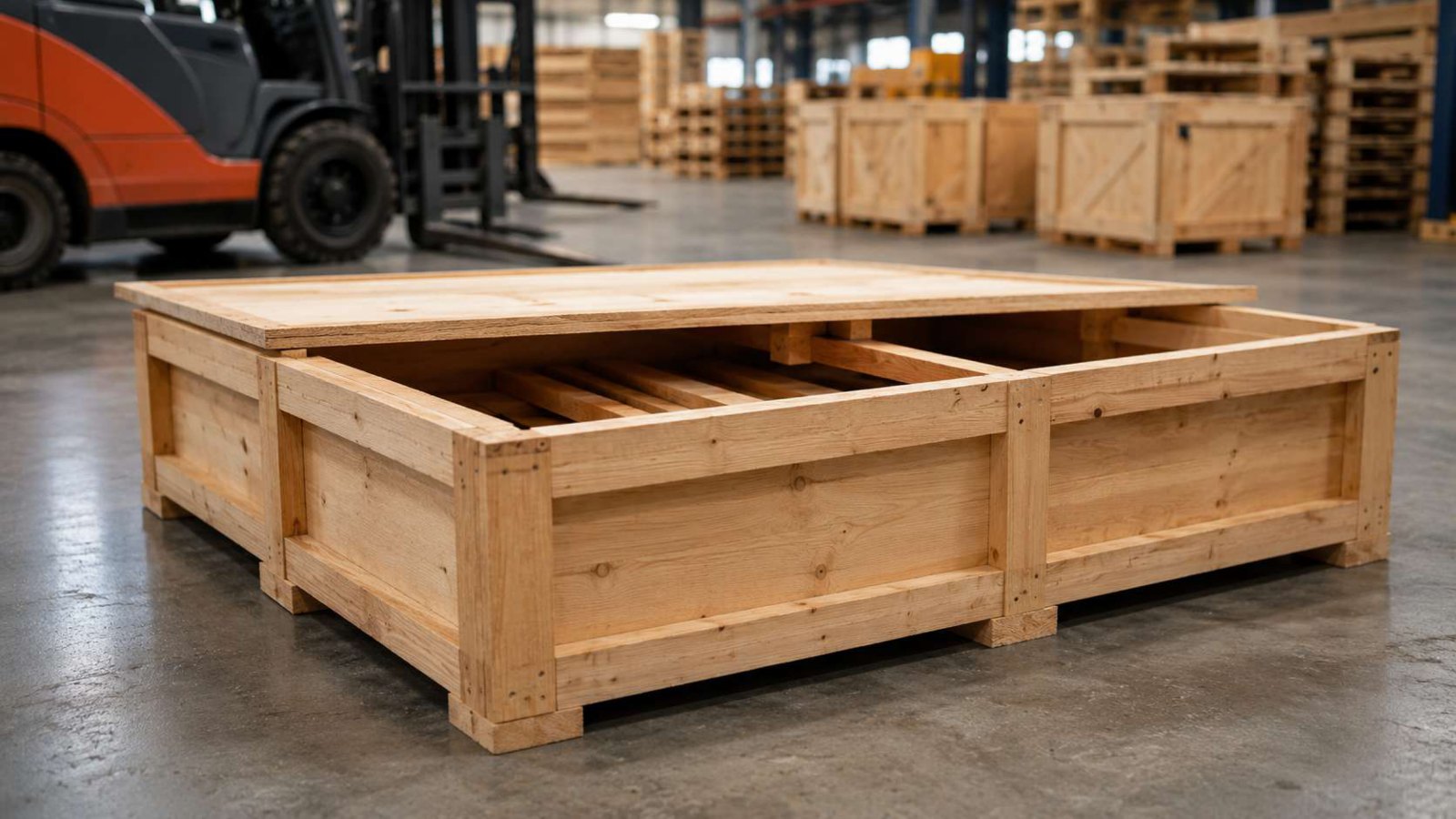
Plywood panels with a wooden frame. Heavier and more expensive but protects sensitive contents from dust, light, and prying eyes. Best for finished goods, electronics, or items going through multiple transfers.
Heavy-duty engineered crate
Reinforced frame, plywood panels, internal bracing tailored to the load. Used for heavy machinery and high-value cargo where the cost of damage in transit dwarfs the cost of the crate.
Step 5 — Specify the Markings
The outside of the crate has to communicate to anyone handling it. Standard markings to consider:
- Centre-of-gravity marker for unevenly weighted loads
- Lifting-point arrows for crane handling
- This-side-up arrows for orientation-sensitive contents
- Fragile or handle-with-care stencils where appropriate
- Tilt indicators mounted externally for sensitive equipment
- ISPM-15 stamp (heat-treated wood) on every crate going to an export destination requiring it
Common Mistakes
- Measuring just the contents. Crate sizing requires planning for dunnage, wall thickness, and handling clearance — not just what's inside
- Forgetting the container. Building a crate that the contents fit perfectly but that's 20 mm too wide for the container costs a redesign at the worst possible moment
- Underspeccing the base. The base bears all the load. If it fails, the whole crate fails
- Skipping ISPM-15 on export crates. Untreated wooden packaging gets rejected at destination port and shipped back at your cost
The shortcut: send us the contents dimensions, weight, destination country, and how the crate will be handled (forklift / crane / both). We'll come back with a crate spec and a price.